martes, 26 de julio de 2016

PASSIVE VOICE
Exercise on Passive Voice - Present Progressive
Rewrite the sentences in passive voice.
- Sheila is drinking a cup of tea. -
- My father is washing the car. -
- Farmer Joe is milking the cows. -
- She is taking a picture of him. -
- I am writing a poem. -
- We are not playing football. -
- He is not wearing a tie. -
- Is she preparing the party? -
- Are they talking about the meeting? -
- Is she watering the flowers? -
SECOND CONTIONAL
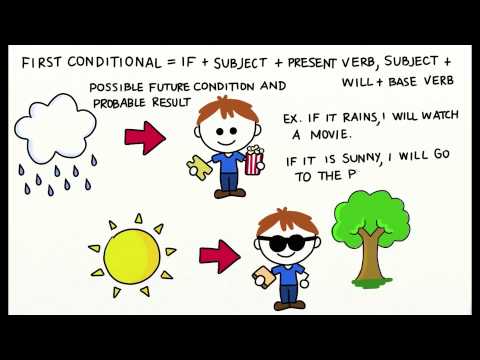
Complete the Conditional Sentences (Type II) by putting the verbs into the correct form. Use conditional I with would in the main clause.
- If we (have) a yacht, we (sail) the seven seas.
- If he (have) more time, he (learn) karate.
- If they (tell) their father, he (be) very angry.
- She (spend) a year in the USA if it (be) easier to get a green card.
- If I (live) on a lonely island, I (run) around naked all day.
- We (help) you if we (know) how.
- My brother (buy) a sports car if he (have) the money.
- If I (feel) better, I (go) to the cinema with you.
- If you (go) by bike more often, you (be / not) so flabby.
- She (not / talk) to you if she (be) mad at you.
PAST PERFECT EXRCISE
Put the verbs into the correct form (past perfect simple).
- The storm destroyed the sandcastle that we (build) .
- He (not / be) to Cape Town before 1997.
- When she went out to play, she (do / already) her homework.
- My brother ate all of the cake that our mum (make) .
- The doctor took off the plaster that he (put on) six weeks before.
- The waiter brought a drink that I (not / order) .
- I could not remember the poem we (learn) the week before.
- The children collected the chestnuts that (fall) from the tree.
- (he / phone) Angie before he went to see her in London?
- She (not / ride) a horse before that day.
PRESENT PERFECT EXERCISE
| Make the present perfect - it could be positive, negative or question. | ||||||||||||||||||||||||||||||||||||||||||
|

miércoles, 13 de abril de 2016

CULTURAL LITERACY
Cultural literacy is a term coined by E. D. Hirsch , referring to the ability to understand and participate fluently in a given culture. Cultural literacy is an analogy to literacy proper (the ability to read and write letters). A literate reader knows the object-language's alphabet, grammar, and a sufficient set of vocabulary; a culturally literate person knows a given culture's signs and symbols, including its language, particular dialectic, stories,[1] entertainment, idioms, idiosyncrasies, and so on. The culturally literate person is able to talk to and understand others of that culture with fluency, while the culturally illiterate person fails to understand culturally-conditioned allusions, references to past events, idiomatic expressions, jokes, names, places, etc.

Wha thave you done lately
TOP DEFINITION
Said to someone when they used to provide very helpful things, but no longer do
You used to give me great things, but -
What have you done for me lately?
What have you done for me lately?
Suscribirse a:
Comentarios (Atom)